Read this article in 中文 Français Deutsch Italiano Português Español
Sany uses new tech on concrete pour for US$7bn Shiziyang Bridge

25 July 2024
Four Sany pump trucks finished pouring the final layer of concrete for the right bearing platform for China’s Shiziyang Bridge’s east tower, which will be the world’s largest double-deck suspension bridge once complete.
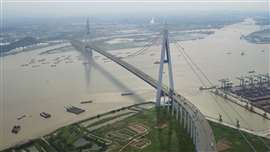 Render of the Shiziyang Bridge double-decker and Warren truss over the Pearl River Estuary in China. (Image: Knight Architects)
The crews used C45 high-strength concrete to pour a total volume of 25,000m3 (32,699 cubic yards) between two circular structures measuring 40m (131ft) in diameter and 9m (30ft) tall.
The four Sany pump trumps worked 22-hours straight on the pour.
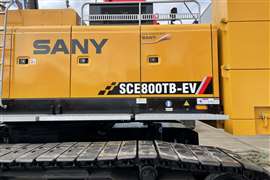
Sany, a China-based multinational heavy equipment manufacturer, said a stepless pressure-pumping system and digital main-valve technology improved direction changes by 20% and enabled pumping an additional load of material every hour. The company said the system prevents pipe blockages and promotes energy-saving operations.
The company also said a ‘new power transmission’ system lowered the operating speed of the machines, leading to cost savings, but did not specify the power technology used.
Details for the Shiziyang Bridge in Southeast China
The massive Shiziyang Bridge will have a total length more than 35km (22 miles), and upon completion, will connect the east and west banks of the Pearl River Estuary in China’s Guangdong-Hong Kong-Macao Greater Bay Area. It will have a 2.2km (1.4 mile) long double-deck suspension at its centre.
UK-based Knight Architects, working with Danish engineering consultant Cowi, delivered the concept design for the bridge.
“The design has a suspension main span, supported from 367m tall A-shaped towers, and shorter side spans over frame-shaped piers,” explained Knight Architects. “The double deck carries a total of 16 lanes. In the main span the decks are the top and bottom chord of a Warren truss.
“The aim of the proposed bridge is to, within the complex engineering constraints and making functionality, structure, and architecture indissoluble, become both a landmark and a fitting addition to the site, and an important part of the future identity of the area.”
It’s expected to cost just less than US$7 billion to construct and open to traffic in 2028.
STAY CONNECTED



Receive the information you need when you need it through our world-leading magazines, newsletters and daily briefings.



CONNECT WITH THE TEAM