Read this article in 中文 Français Deutsch Italiano Português Español
Seven construction technology trends for 2026

01 December 2025
Industry voices forecast rapid gains in decision-making, robotics, remote monitoring and just-in-time modular workflows as cost pressure intensifies.
 Mixed-fleet data, real-time intelligence and autonomous machines will be among the biggest construction technology trends for 2026. Image: Adobe Stock
1) Artificial intelligence and Machine Learning (AI/ML)
59% of respondents of a recent Trimble survey said that artificial intelligence and machine learning (AI/ML) will be one of the biggest trends, and for good reason – it has and will continue to transform the construction industry due to the many efficiencies it brings.
From automating processes, to improving decision making, to enhancing team productivity, we expect AI/ML to continue to streamline the construction industry, creating more efficient, cost-effective, and safer construction projects.
Aviad Almagor, VP of Tech Innovation, Trimble
2) Cost pressure, operational focus, and productivity gains
In 2026, we will face continued pressure from rising material costs, tariff uncertainty, and tighter project margins. Owners will need contractors to share some of the cost burden to get projects started and expect greater predictability and discipline in how projects are run. Because of this, we will need to streamline operations and remove unnecessary complexity wherever possible. Productivity will be the defining theme of the year.
We will see tighter scheduling, better integration among trades, and a stronger focus on reducing the idle time that drains so much value from the jobsite. Technology will play a major role, but not as a collection of isolated tools. We will depend on integrated systems that create a single source of truth and help teams communicate and execute more effectively. Firms that prioritise efficiency and clarity will be best positioned to compete in this environment.
Shanthi Rajan, CEO, Linarc
 Modular construction offer numerous benefits to construction. Image: Adobe Stock
3) Modular construction demands a new kind of integrator
As modular, factory-built construction becomes standard, a new layer of logistical complexity arises. Success means not only manufacturing off-site, but also seamlessly integrating components into the on-site workflow. This requires a new specialisation for general contractors as integrators of modular workflows.
This role is the lynchpin connecting the factory floor to the foundation. It involves managing a far more complex, just-in-time supply chain and ensuring the digital twin of a modular component aligns perfectly with the physical reality on site. Those who master this will be able to deliver on the promise of modular – speed, quality, and cost-effectiveness.
Ryan Kunisch, VP Global Strategy, Oracle Construction and Engineering
4) Robotics/Automation and Autonomous Machines
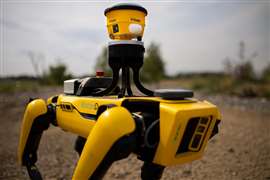 Autonomous machines are already here, but could 2026 see their adoption grow? Image: Boston Dynamics
Robotics, automation and autonomous machines will continue to play an important part in the future of construction, and the safety and security of location data will be a key driver. In addition to delivering benefits in the field, these solutions will add value through data collection and analysis that can be used for predictive insights and lead to incremental productivity gains.
Autonomous machines will continue to move out of test sites and into field trials in 2025, continuing their steady march forward. The better these autonomous technologies become, the better visibility companies will have into their daily operations, and the data collected over time can help them make better informed decisions.
Nathan Patton, product marketing manager, field systems, Trimble
5) Shift from reactive to predictive
2026 will bring a bigger move from being reactive to predictive maintenance. Old school inspection cycles can’t keep up with aging infrastructure and extreme weather. 2026 will mark the beginning of widespread adoption of embedded sensors, robotics and analytics that catch problems like corrosion and cracks long before they become critical.
Predictive maintenance will extend the life of critical structures and reduce emergency repairs for infrastructure that performs better and lasts longer.
Jerrub Hammrich, VP of R&S at DYWIDAG
6) The general contractor is the new orchestrator
While agentic AI will give owners unprecedented control and visibility, this doesn’t sideline the general contractor, but elevates their role. As AI handles the tedious work of monitoring progress, running assessments, and flagging deviations, the GC is freed from manual data reconciliation. Their focus shifts to where it delivers the most value: smarter orchestration. They become the strategic hub, managing by exception and aligning stakeholders around AI-surfaced insights.
Think of the practical implications: instead of spending Monday mornings chasing down progress reports, a project team will start the week reviewing key AI-flagged alerts that pose a threat to the delay the schedule or increase the budget. Their time and expertise is no longer wasted on the process of data collection, but is aimed at high-impact decision-making– resequencing work, reallocating resources, and collaborating with owners to prevent costly rework and project delays. GC’s no longer are just builders; they transition to conductors of a highly complex, data-driven orchestra.
Ryan Kunisch, VP Global Strategy, Oracle Construction and Engineering
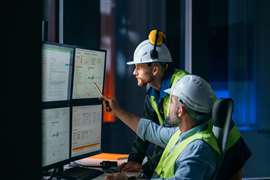 Remote monitoring could become one of the most impactful advancements on construction sites. Image: Adobe Stock
7) Remote monitoring and transparency
In 2026, we will see remote monitoring become one of the most impactful advancements on construction sites. The combination of drones, fixed sensors, and autonomous robotics will give teams a continuous view of jobsite progress. When this data feeds into predictive analytics, we will be able to identify risks earlier and validate schedules with far greater accuracy. This level of visibility will reshape how teams collaborate, as everyone will finally work from the same live information rather than disconnected reports.
These tools will help us move from reacting to issues to anticipating them. As digital adoption accelerates, remote monitoring and predictive insights will become standard components of modern project delivery.
Shanthi Rajan, CEO, Linarc
STAY CONNECTED



Receive the information you need when you need it through our world-leading magazines, newsletters and daily briefings.

CONNECT WITH THE TEAM