Read this article in Français Deutsch Italiano Português Español
Google signs deal to build small nuclear reactors to power data centres

15 October 2024
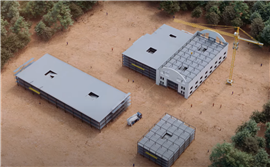 Screengrab of a digital video showing the construction of a Kairos Power SMR (Image: Google)
US-based tech giant Google has signed a corporate agreement to buy energy from multiple small modular nuclear reactors (SMRs) to be developed by Kairos Power.
In an announcement posted online, Google said that the first phase of work would involve bringing Kairos Power’s first SMR online by 2030, followed by additional reactor developments through 2035.
It said that overall, the deal would enable up to 500MW of power to electricity grids.
Google said the electricity grid needed new sources of power to support artificial intelligence (AI). Data centres are notoriously power hungry and one of the main obstacles to their further development is a lack of power on local grids. However, it has so far proven difficult to get commercial SMR projects off the ground (see below).
Kairos Power’s SMRs use a molten-salt cooling system, combined with a ceramic, pebble-type fuel. Google said the design allowed the reactor to operate at a lower pressure, making it more affordable.
Kairos will complete multiple hardware demonstrations ahead of its first commercial plant, using iterative design. This summer, the company broke ground on its Hermes non-powered demonstration reactor in Tennessee, USA, making it the first US advanced reactor project to receive a construction permit from the US Nuclear Regulatory Commission.
Google’s senior director, energy and climate, Michael Terrell, said, “This agreement is part of our efforts to develop and commercialise a broad portfolio of advanced clean electricity technologies to power our global data centres and offices.
“This approach will complement our use of variable renewables, like solar and wind, and help us reach our ambitious 24/7 carbon-free and net-zero goals. The next generation of advanced nuclear reactors offers a new pathway to accelerate nuclear deployment thanks to their simplified design and robust, inherent safety. Their smaller size and modular design can reduce construction timelines, allow deployment in more places, and make the final project delivery more predictable.”

STAY CONNECTED



Receive the information you need when you need it through our world-leading magazines, newsletters and daily briefings.


CONNECT WITH THE TEAM