Read this article in French German Italian Portuguese Spanish
Research highlights UK plastic waste is 15 times higher than EU

15 August 2024
An analysis of European Commission data published by the Copper Sustainability Partnership (CuSP) has revealed a significant increase in plastic waste generated by the UK’s construction industry compared to other European countries.
 According to EU data, the recycling rate for post-consumer polyvinyl chloride (PVC), which is the most common type of plastic used in construction, is only around 3% (Photo: AdobeStock)
The research shows that the amount of plastic waste generated by the UK construction industry increased at an average rate of 210% every two years between 2004 and 2018 – the last year data was collected on construction waste.
This rate is 15 times higher than the average increase in plastic waste from construction activities in EU member states, which rose by 14% every two years over the same period. The research also found that across all industries in the UK, plastic waste increased by an average of 4% every two years, indicating a much slower growth compared to the construction industry’s plastic waste.
Oliver Lawton, co-founder of CuSP and managing director of Lawton Tubes, said, “The research stands as stark testimony to the shift we have witnessed anecdotally in recent years, with suppliers and manufacturers drawn toward cheap plastic materials that are not fit for purpose.
“Contrary to the claims made by plastic manufacturers on the longevity of their products, construction plastics often perform poorly compared to traditional constructional materials, leading to breakages and failures that negate the immediate cost savings associated with plastics.
“At the end of a building’s life cycle, most plastic waste still isn’t recycled and is instead sent to a landfill, exported abroad or incinerated. Low recycling rates also necessitate new plastic products, leading to a linear cycle of production, use and waste.”
According to EU data, the recycling rate for post-consumer polyvinyl chloride (PVC), which is the most common type of plastic used in construction, is only around 3% says the CuSP.
Additionally, the CuSP adds that plastic composites like multi-layer composite pipe (MLCP), which have gained popularity over the last 20 years, are often not recycled at all due to challenges in separating the different materials that make up the product.
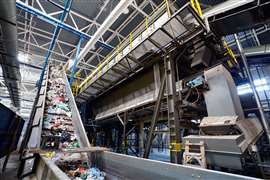
In comparison, steel, copper and aluminium – three of the main metals used in construction – have recycling rates of at least 70%.
Co-founder of CuSP and Head of Sales at Mueller Europe, Andrew Surtees, commented, “While most construction plastics are marketed as theoretically recyclable, in reality only traditional buildings with a long-standing history of recovery and recycling will be made of recycled material and go on to be recycled at the end of their life cycle
“With the UK construction industry falling further behind in its net-zero commitments, phasing out plastics in favour of fully recyclable materials with proven sustainability credentials remains one of the biggest opportunities for sustainable growth in the sector.”
STAY CONNECTED




Receive the information you need when you need it through our world-leading magazines, newsletters and daily briefings.


CONNECT WITH THE TEAM