Budapest-Belgrade railway hits a roadblock

26 September 2023
Construction work on the Budapest-Belgrade railway line has been suspended as the Chinese-Hungarian contracting consortium struggles to meet European Union (EU) security standards.
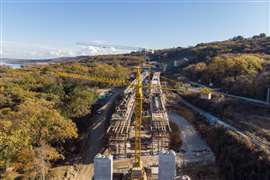 Construction costs have risen significantly on the Budapest-Belgrade high-speed rail project. Photo: Adobe Stock/Djordje
The consortium, led by Chinese constructors and their Hungarian counterparts, are also facing budget overruns, project delays, and political negotiations over the project, which is seen as a major component of China’s Belt and Road Initiative.
Initially launched with a budget of €2.1 billion, the project has been hit with a series of setbacks, the latest of which is a failure to provide a security system that complies with EU standards. This has stalled construction activities on the railway line.
One of the key requirements for the project is to enable trains to travel at speeds of up to 160km per hour. To achieve this, the rail line must comply with the EU-standardised safety system, known as the European Train Control System (ETCS).
The consortium’s efforts to meet these requirements have reportedly proven unsuccessful to this point.
Rising costs
According to reports from the local journalist network Telex, the project is also now in need of additional funding, due primarily to rising construction costs.
The Hungarian company in the consortium, RM International, has withdrawn its workforce and machinery from the construction site.
It is reported that they have been reassigned to the renovation of Hungary’s primary railway line between Budapest, Gyor and Vienna.
The Budapest-Belgrade railway line upgrade is a 350km high-speed rail project financed primarily by China’s Exim Bank, which is contributing 85% of the project’s total investment.
STAY CONNECTED



Receive the information you need when you need it through our world-leading magazines, newsletters and daily briefings.


CONNECT WITH THE TEAM