Switch Maritime plans to build hydrogen-fueled vehicle ferry in U.S.

12 November 2024
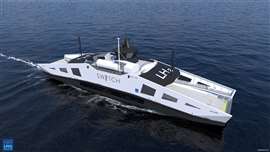 The Switch Maritime LH2 ropax ferry. (Image: Switch Maritime/LMG Marin)
Switch Maritime, which launched the first hydrogen-powered ferry in the U.S. — the Sea Change — announced it plans to begin U.S. construction of an 80-car, 300-passenger vehicle ferry design that is already successfully operating in Norway on liquid hydrogen (LH2) fuel. The project is a collaboration with LH2 Shipping AS and ship designer LMG Marin AS, both of Norway.
The ferry, which is called a ropax because it combines roll-on/roll-off (ro-ro) decks with passenger facilities, will carry 3 metric tons (6,614 lb.) of LH2, Switch said. With a service speed of 14 knots, the vessel is expected to refuel only once per week during typical operations with no shoreside electric charging infrastructure necessary.
The larger steel hull of the vehicle ferry offers more flexibility in terms of space and weight compared to aluminum catamaran fast ferry designs, making it an ideal platform for introducing LH2 fueling in the U.S., Switch said. The LH2 from the cryogenic storage tanks is vaporized onboard and used in the proton-exchange membrane (PEM) fuel cells to create electricity for the electric motors. The vessel’s only emissions will be water vapor.
The ferry’s Norwegian predecessor, the MF Hydra, is owned by Norwegian shipping company Norled and performs a triangular round-trip vehicle ferry service of 6 nautical miles, Switch said, refueling its 4 metric ton (8,818 lb.) tank only once every 2 weeks. MF Hydra has been in operation since March 2023, and has not been out of service other than for planned maintenance.
Switch said it has focused on hydrogen for its potential to serve where other battery-only solutions fall short due to space and weight constraints. Hydrogen fuel can generally support greater range and power requirements due to its high energy density, the company said. It also simplifies zero-emissions vessel operations by eliminating the need for fixed shoreside charging infrastructure.
While compressed gaseous hydrogen (GH2) is well suited for small- to medium-sized vessels, Switch said cryogenic LH2 becomes the preferred storage solution as vessel size and energy demands increase.
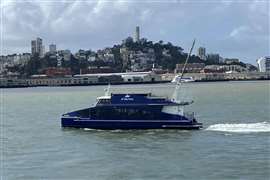
In addition to the Sea Change, Switch said it is working on a 150-passenger, 25-knot catamaran to build for the San Francisco (Calif.) Bay Ferry service using the same GH2 storage and fuel cell equipment as the Sea Change. That new vessel will be revealed in Q1 2025, Switch said.
STAY CONNECTED



Receive the information you need when you need it through our world-leading magazines, newsletters and daily briefings.


CONNECT WITH THE TEAM