Read this article in 中文 Français Deutsch Italiano Português Español
Smart hard hat with emergency detection and digital medical ID launches in US

02 October 2025
A new smart hard hat that detects emergency incidents and provides a digital medical ID to first responders has launched in the US market.
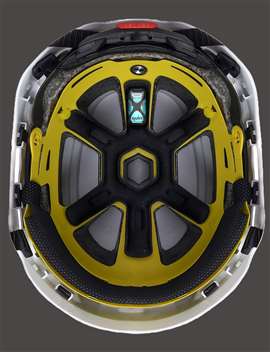 An inner view of PIP’s smart hard hat with a Quin sensor fitted (Image courtesy of Quin)
Quin, a developer of intelligent safety technology, has partnered with personal protective equipment supplier Protective Industrial Products (PIP) to bring smart products to market, beginning with PIP’s Traverse safety helmet line.
The PIP Traverse with Quin technology, unveiled at the 2025 NSC Safety Congress & Expo and awarded second place in the NSC New Product of the Year Showcase, integrates two systems designed to accelerate emergency response.
The Quin Pod system detects falls, impacts, and environmental risks, sending automated alerts with incident analytics to site teams, emergency contacts, and the emergency services. It also offers temperature-change alerts, helmet-drop tracking, and an SOS beacon.
Meanwhile, Quin Tag acts as a secure digital medical ID, giving first responders controlled access to encrypted medical details stored in the helmet. In emergencies, the Tag can be scanned to display medical information or to trigger a help request. Quin Tag can also be retrofitted to existing Traverse helmets.
Quin chief executive Anirudha Surabhi said the integration “helps close critical safety gaps on industrial sites.”
PIP above-the-neck category manager Dan Birch said, “Our customers will be the first in the U.S. construction market to access this level of real-time safety intelligence.” He added that the tie-up with Quin turned the hard hat into an intelligent safety system that would “enhance protection and productivity”.
The helmets will be available in the US from the fourth quarter of 2025, with further product details to follow.
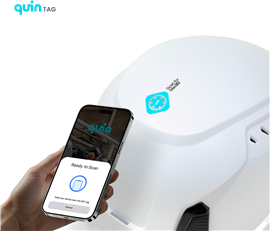 The Quin Tag contains an encrypted digital medical ID, which can provide information about the wearer during emergencies (Image courtesy of Quin)
STAY CONNECTED



Receive the information you need when you need it through our world-leading magazines, newsletters and daily briefings.



CONNECT WITH THE TEAM