Responsive Image Banner

New $1 billion data centre

Premium Content

10 September 2018

The groundbreaking ceremony for Facebook’s new US$1 billion data centre in Singapore has been held.
Facebook

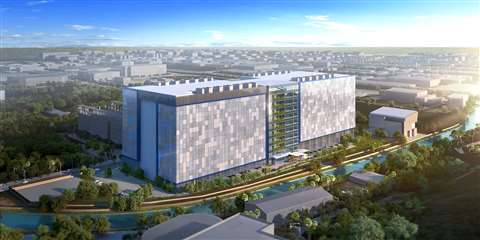
A rendering, courtesy of Facebook, of what the new data centre will look like when completed 

The data centre – which is being built by US-based contractor Fortis Construction – will be 11 storeys high and 1.6 million m².

It will be constructed of lightweight material and, according to Facebook, the building will be completely run on renewable energy.

This will be the first data centre which the social media giant has built in Asia.

In a blog post, Facebook wrote, “We selected Singapore for a number of reasons, including robust infrastructure and access to fiber, a talented local workforce, and a great set of community partners.”

STAY CONNECTED

Receive the information you need when you need it through our world-leading magazines, newsletters and daily briefings.


Sign up

Longer reads
Building at the bottom of the world: Final season constructing an Antarctic research facility
British Antarctic Survey’s project manager David Brand on the challenges of building in Antarctica as handover of Discovery Building draws closer
Down and changing: ICm20 crane maker ranking
A decline in 2025 but perhaps smaller than might have been expected
Seven construction technology trends for 2026
Experts say mixed-fleet data, real-time intelligence and autonomous machines will reshape project planning and field execution
CONNECT WITH THE TEAM
Andy Brown Editor, Editorial, UK - Wadhurst Tel: +44 (0) 1892 786224 E-mail: [email protected]
Neil Gerrard Senior Editor, Editorial, UK - Wadhurst Tel: +44 (0) 7355 092 771 E-mail: [email protected]
Eleanor Shefford Brand Manager Tel: +44 (0) 1892 786 236 E-mail: [email protected]
Peter Collinson International Sales Manager Tel: +44 (0) 1892 786220 E-mail: [email protected]
CONNECT WITH SOCIAL MEDIA

Electrifying change

NEW ARTICLE

Off-Highway Research highlights steady progress in electrification, with market penetration at 0.8% and forecast to more than triple to over 3% by 2028. Nate Keller of Moog shares how hybrid innovation could accelerate this shift in the decade ahead.

Read now