Green light for UK’s first vertical launch spaceport

03 March 2022
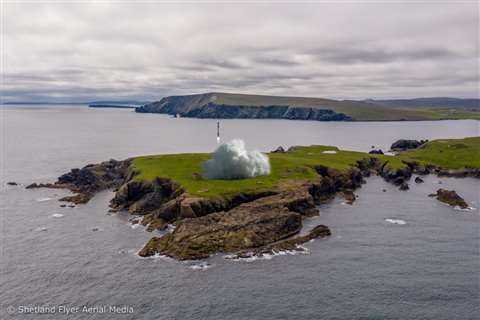 (Image: SaxaVord/Shetland Flyer Aerial Media)
Planning permission for what will become the first vertical launch spaceport in the UK has been granted by local authorities in Scotland.
Plans for the SaxaVord Space Port facility, which is designed to accommodate small rockets that will deliver payloads weighing up to 1.5 tonnes into low earth orbit, were recently approved by Shetland Islands Council, following the withdrawal of objections to the project made by Historic Environment Scotland.
SaxaVord Spaceport CEO, Frank Strang, said, “We have been working on bringing the space economy to Shetland for five years, so it is fantastic that the economic benefits are already being felt.
“To date, we have teamed up with established Shetland companies, such as Sandisons and Ocean Kinetics, as well as emerging local organisations, created by Unst residents who wish to support our exciting project.
“We will spend upwards of £43m over the next 18 months, rising to £100m in the next five years. We have already started blasting and crushing stone and are seeking to clarify the conditions imposed on the development by HES, SIC and others as soon as possible.
“Our team will collectively do everything in its power to ensure we can deliver this historic mission for Shetland, Scotland, and the UK.”
Due to be built on the northern Shetland island of Unst, SaxaVord Space Port will comprise a maximum of three launch pads and three integration hangers.
The privately-funded facility, the cost of which will run into the tens of millions, will also see the development of a ground station network of 1.5 to 3.7m antennas, that will be used to support satellite operations.
With local support for the project described as “tremendous” - and Scottish ministers thought to be unlikely to exercise their right review the planning approval within the allowed 28-day period following a planning decision, construction on the spaceport could begin before the end of this month.
Strang said, “In many ways, it has been humbling for us all. I would like to thank everyone involved for their patience and belief in what we are delivering.”
He added, “...Space is a global business, and we at SaxaVord are working with clients from all over the world to achieve this.
“Only the other week, with the Under Secretary of State for Scotland, we hosted several engineers from Edinburgh-based launch company Skyrora, who are committed to launching from our site on Shetland in the next few years.
“Although Scottish domiciled, their roots are very much in Ukraine. I would like to express our very best wishes and support to all their staff and families who are now caught up in the dreadful events in Ukraine following the senseless Russian invasion of their homeland.”
STAY CONNECTED




Receive the information you need when you need it through our world-leading magazines, newsletters and daily briefings.
CONNECT WITH THE TEAM